
Overview
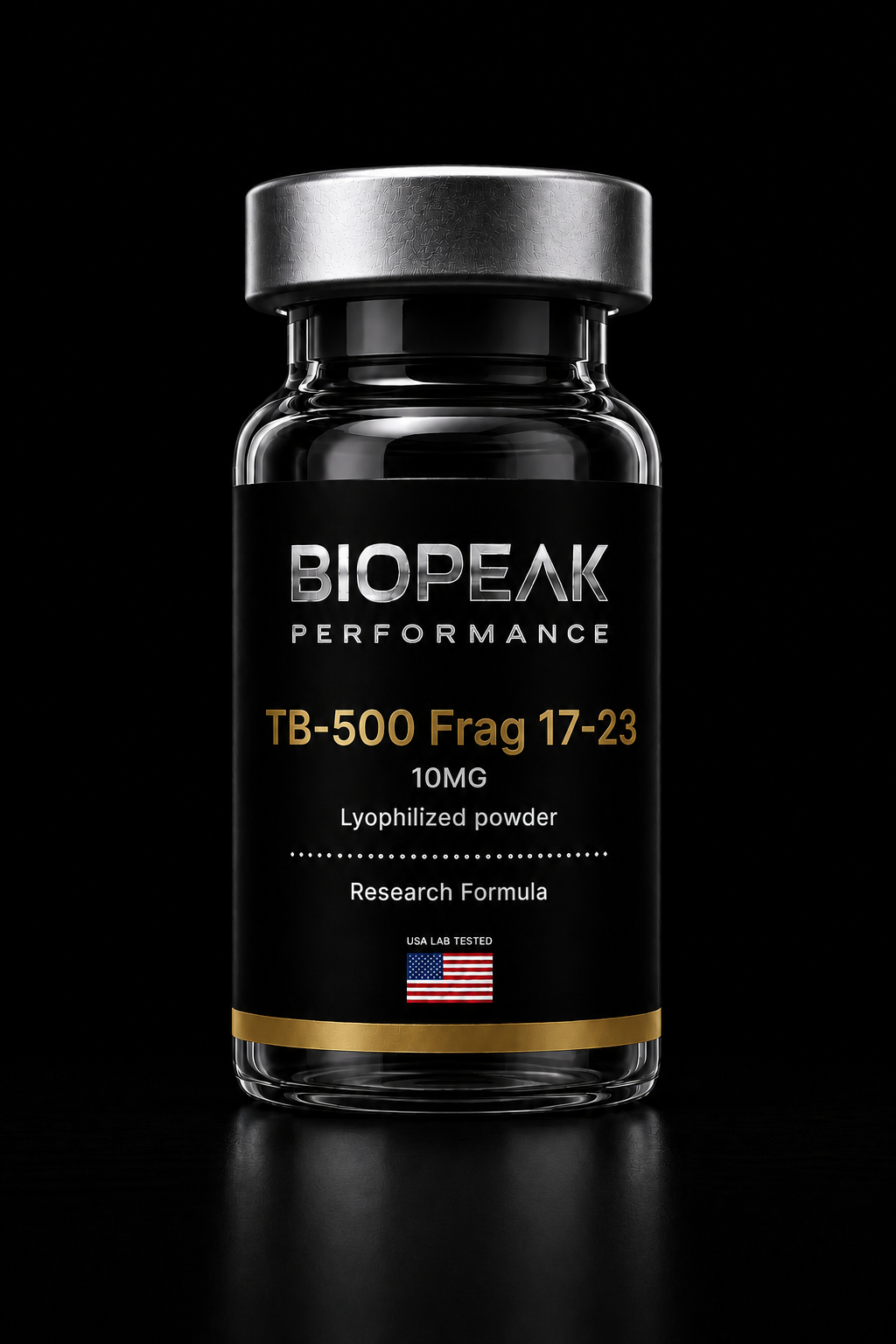
TB-500 is a synthetic version of the active region of Thymosin Beta-4, a naturally occurring peptide found in nearly every human and animal cell. It is studied for its role in cellular migration, blood-vessel formation, and tissue regeneration across muscle, tendon, cornea, and cardiac tissue.
Mechanism of action
TB-500 binds to and sequesters G-actin, regulating cytoskeletal reorganization. This enables cell migration to injury sites, promotes new blood-vessel growth (angiogenesis), and modulates inflammation by reducing inflammatory cytokine activity.
Reported benefits
- Accelerated recovery from muscle, tendon, and ligament injury
- Improved flexibility and reduced muscle spasm
- Enhanced wound healing and reduced scar tissue
- Cardiovascular tissue repair in animal models
- Systemic anti-inflammatory effects
Research dosing
Typical research protocols: 2–5 mg per week, often split into two subcutaneous injections. Loading phase of 4–6 weeks, then maintenance at lower frequency.
Considerations
Effects are systemic — not just localized to injection site. Often combined with BPC-157 for compound regenerative effects. Generally well-tolerated in research settings.
Frequently stacked with BPC-157 for compound healing protocols.
Research use only. This article is provided for educational purposes and is not medical advice. Products sold on this website are for laboratory research only and are not intended for human consumption. Not evaluated by the FDA.