
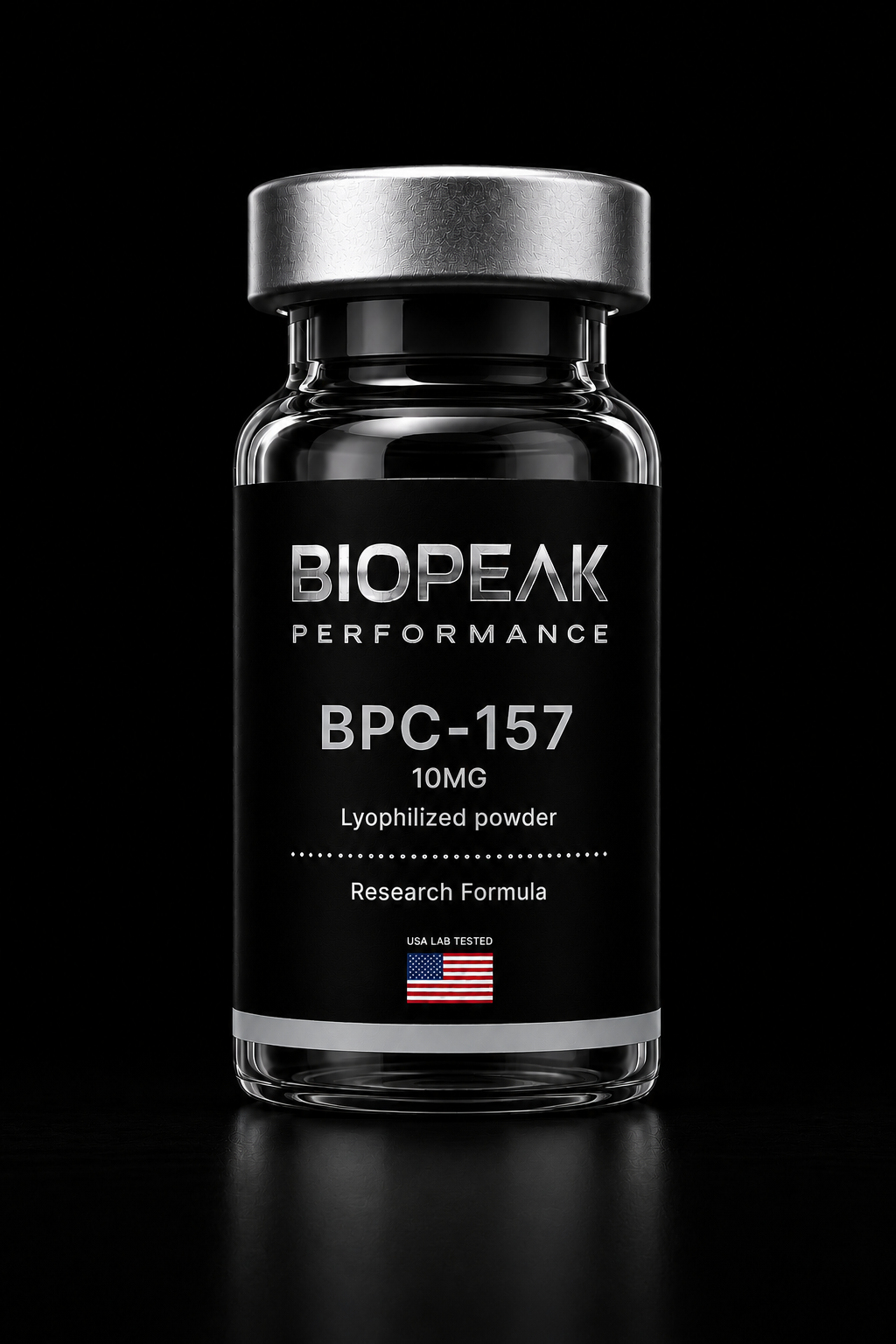
Overview
BPC-157 (Body Protection Compound) is a 15-amino-acid fragment isolated from human gastric juice. It has been studied extensively in animal models for its broad cytoprotective and regenerative effects — particularly in tendon, ligament, muscle, GI mucosa, and vascular tissue.
Mechanism of action
BPC-157 upregulates growth-hormone receptor expression in fibroblasts and accelerates angiogenesis (new blood-vessel formation) via VEGFR2 pathways. It also modulates nitric oxide synthesis and counters the damaging effects of NSAIDs on gut lining.
Reported benefits
- Accelerated tendon, ligament, and muscle repair
- Reduced inflammation in soft-tissue injury models
- Gut barrier protection and ulcer healing
- Improved recovery from intense training
- Neuroprotective effects in early studies
Research dosing
Research protocols commonly use 250–500 mcg subcutaneously once or twice daily, often injected near the injury site when soft-tissue healing is the focus. 4–6 week cycles.
Considerations
One of the safest peptides in the research literature with no significant adverse effects reported across hundreds of animal studies. Often stacked with TB-500 for synergistic tissue repair.
Pairs synergistically with TB-500 for accelerated soft-tissue recovery.
Research use only. This article is provided for educational purposes and is not medical advice. Products sold on this website are for laboratory research only and are not intended for human consumption. Not evaluated by the FDA.
Continue reading