Overview
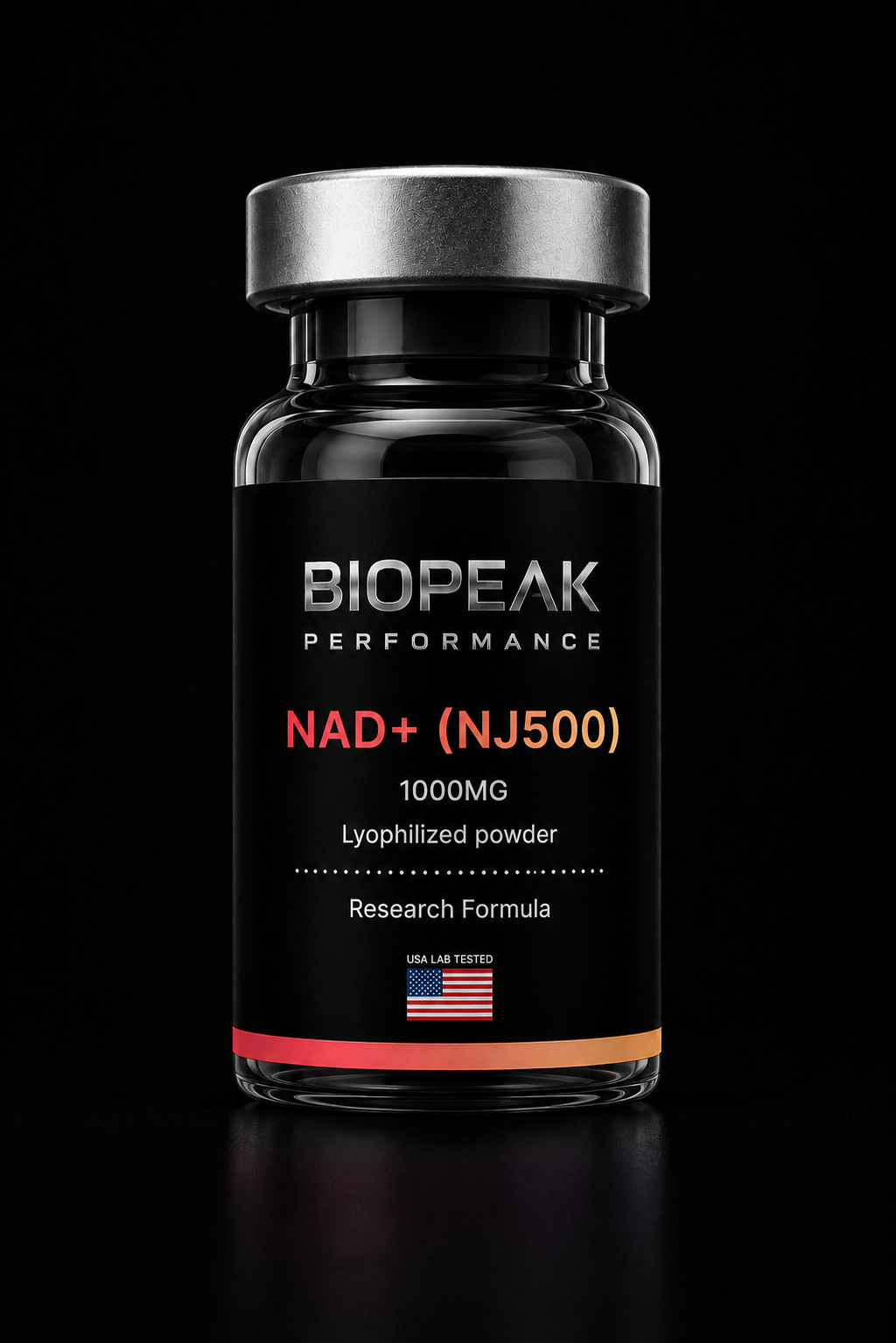
NAD+ (nicotinamide adenine dinucleotide) is a coenzyme present in every living cell, essential for energy metabolism, DNA repair, and gene regulation. Cellular NAD+ levels decline sharply with age — by some estimates more than 50% by midlife — and restoring them is one of the most actively studied interventions in longevity science.
Mechanism of action
NAD+ serves as a substrate for sirtuins (longevity genes), PARPs (DNA repair enzymes), and CD38. Replenishing NAD+ restores mitochondrial function, enhances DNA repair capacity, and activates SIRT1/SIRT3-mediated metabolic adaptation.
Reported benefits
- Improved mitochondrial energy production
- Enhanced DNA repair capacity
- Sirtuin activation (cellular longevity pathways)
- Cognitive clarity and energy
- Support for metabolic and cardiovascular health markers
Research dosing
Research protocols vary widely. Common subcutaneous protocols use 100–250 mg per session, 2–5 times per week. IV infusion protocols (300–750 mg over several hours) are used clinically.
Considerations
Subcutaneous injection can cause local discomfort due to NAD+'s acidic pH — slow injection helps. The most rigorously studied longevity intervention in this catalog.
Research use only. This article is provided for educational purposes and is not medical advice. Products sold on this website are for laboratory research only and are not intended for human consumption. Not evaluated by the FDA.
Continue reading