
Overview
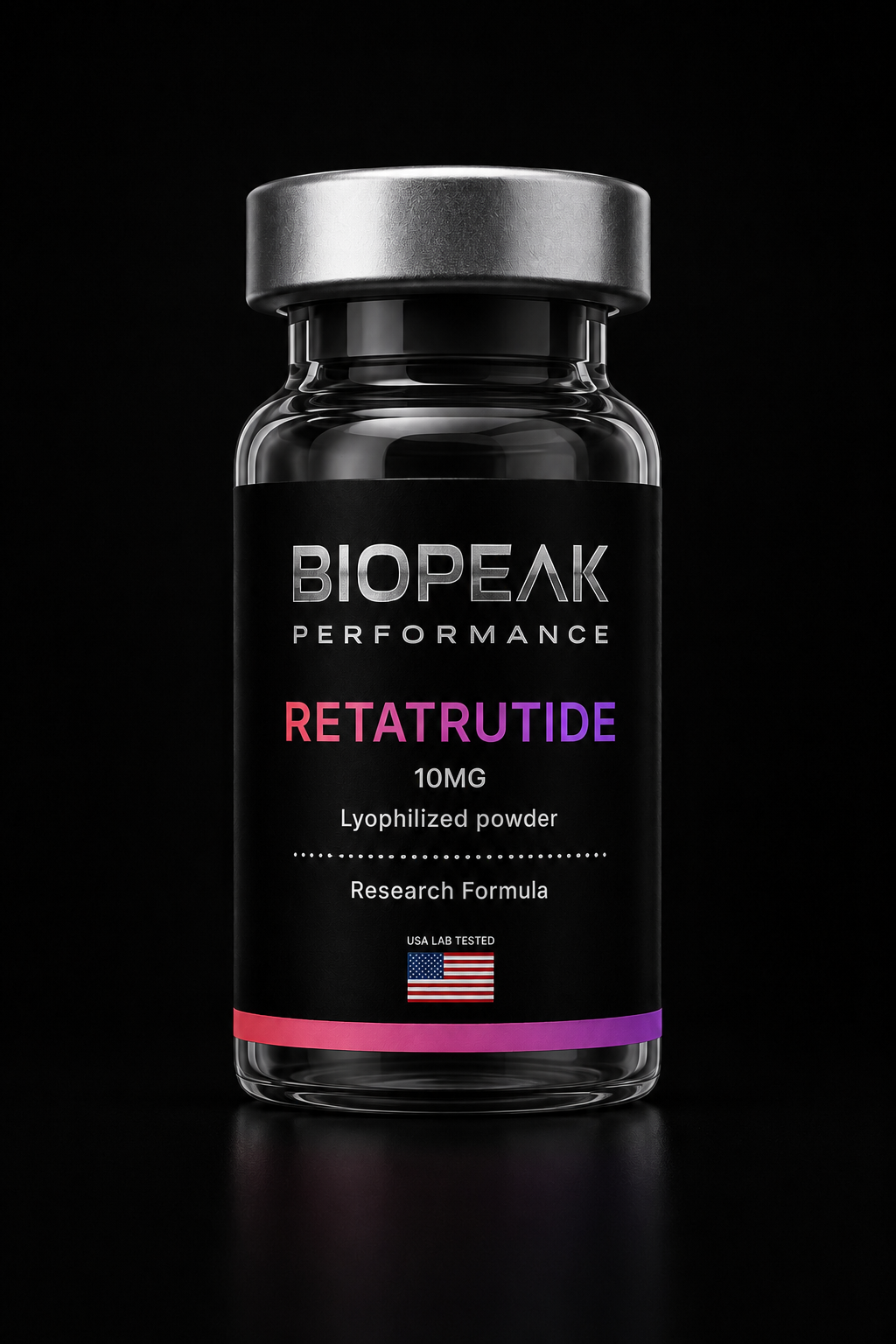
Retatrutide is an investigational triple receptor agonist developed for the study of obesity and type-2 diabetes pathways. By simultaneously engaging GLP-1, GIP, and glucagon receptors, it produces some of the most pronounced fat-loss and metabolic effects observed in current peptide research — surpassing what single- or dual-agonists like semaglutide and tirzepatide demonstrate in early trial data.
Mechanism of action
GLP-1 activation suppresses appetite and slows gastric emptying. GIP activation enhances insulin sensitivity and modulates fat-cell behavior. Glucagon activation increases energy expenditure and hepatic fat oxidation. The combined signaling reduces caloric intake while simultaneously raising basal metabolic rate.
Reported benefits
- Dramatic reduction in body fat percentage in trial settings
- Improved insulin sensitivity and glucose handling
- Increased resting energy expenditure
- Reduced hepatic fat (steatosis) markers
- Strong appetite suppression with sustained satiety
Research dosing
Typical research protocols use 2 mg subcutaneously once weekly, often titrated up slowly from 0.5 mg to mitigate GI side effects. 12-week cycles are common.
Considerations
GI symptoms (nausea, reflux) are dose-dependent and usually resolve with slow titration. Adequate protein intake and resistance training are typically paired in research models to preserve lean mass during rapid fat loss.
Research use only. This article is provided for educational purposes and is not medical advice. Products sold on this website are for laboratory research only and are not intended for human consumption. Not evaluated by the FDA.
Continue reading